Improving trust in the V2X security credential system through misbehavior detection
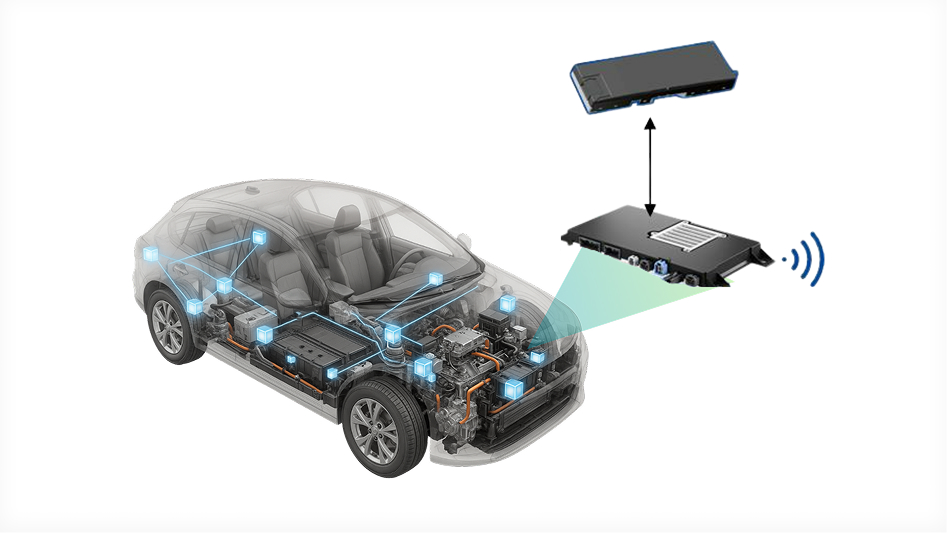
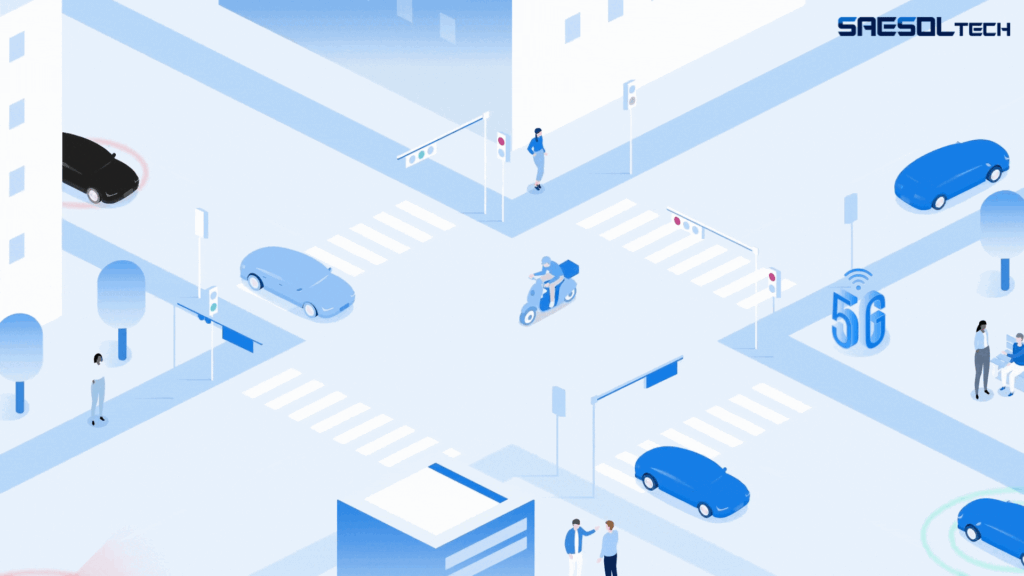
A SUMO-based SILS (Software-in-the-Loop Simulation) designed to simulate complex traffic environments including vehicles, pedestrians, traffic lights, and personal mobility, enabling generation of V2X messages for large-scale end entities.
In particular, AI-based traffic models and message generation algorithms are applied so that generated V2X messages resemble messages observed in real road environments.
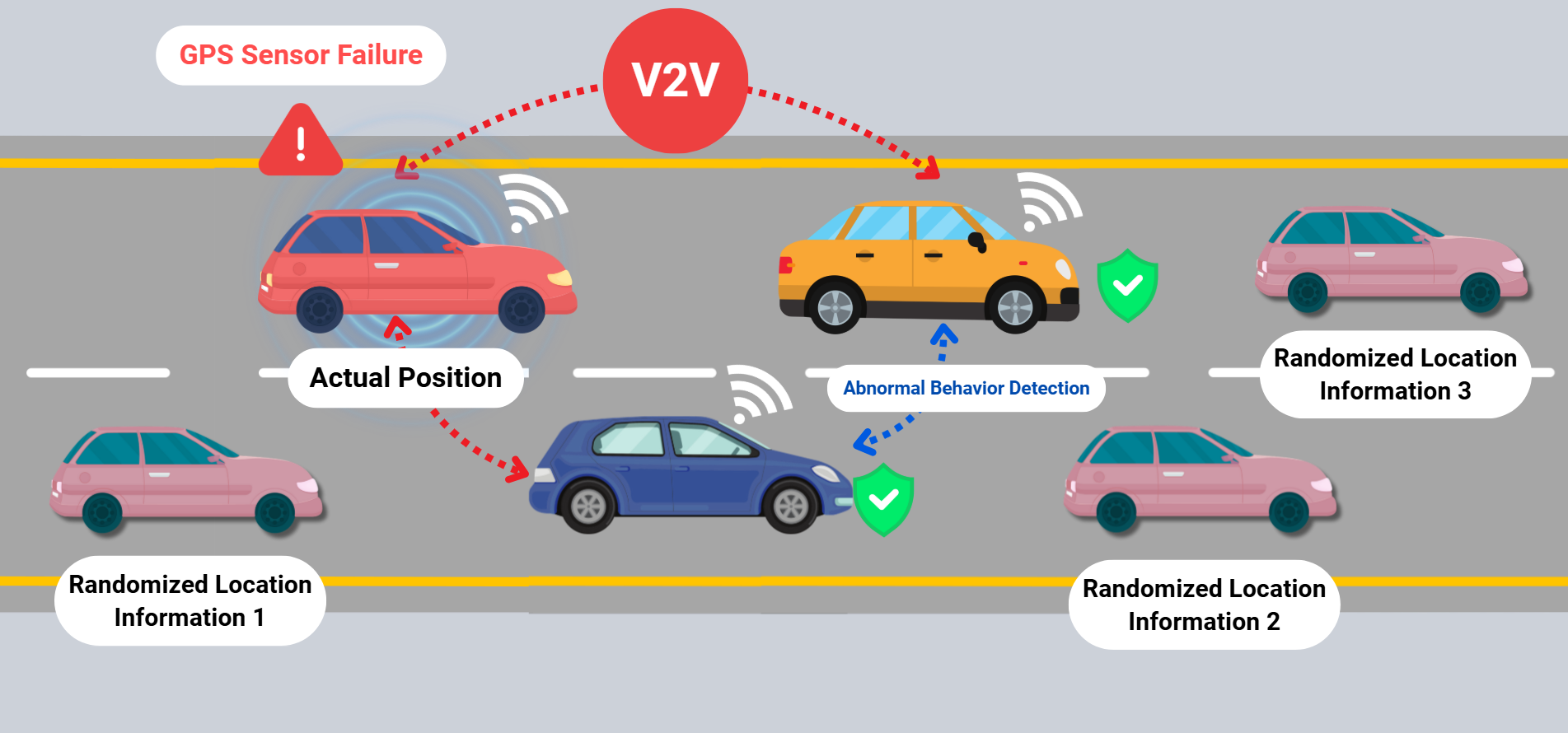
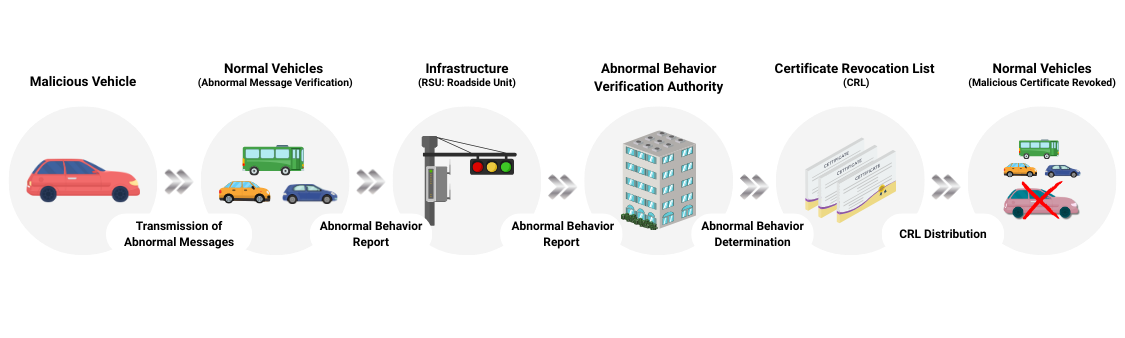
Precisely reproduces congestion situations and malicious device (Misbehavior OBU) scenarios, enabling effective testing and development of MBD (Misbehavior Detection) functions.
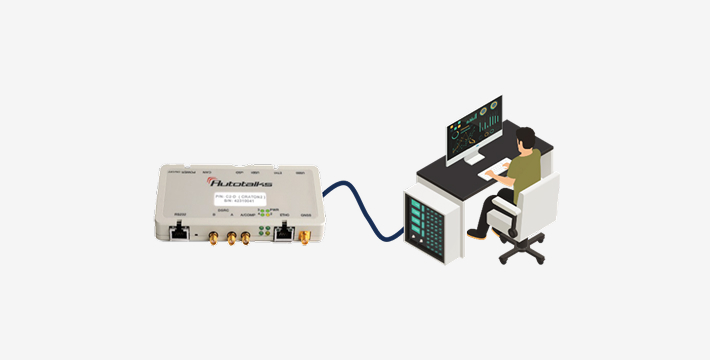
Lightweight on-device AI-based LMBD operating within the device
Misbehavior occurrence and detection (fail-safe example)
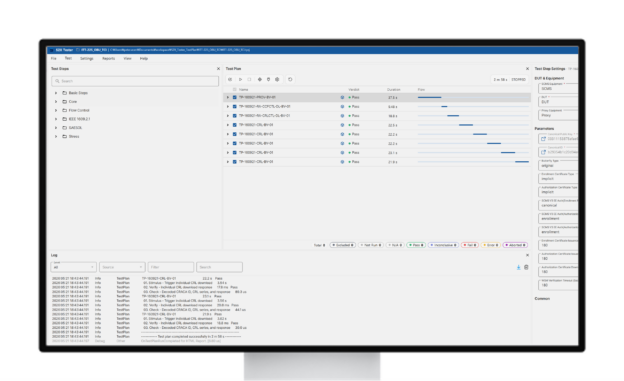
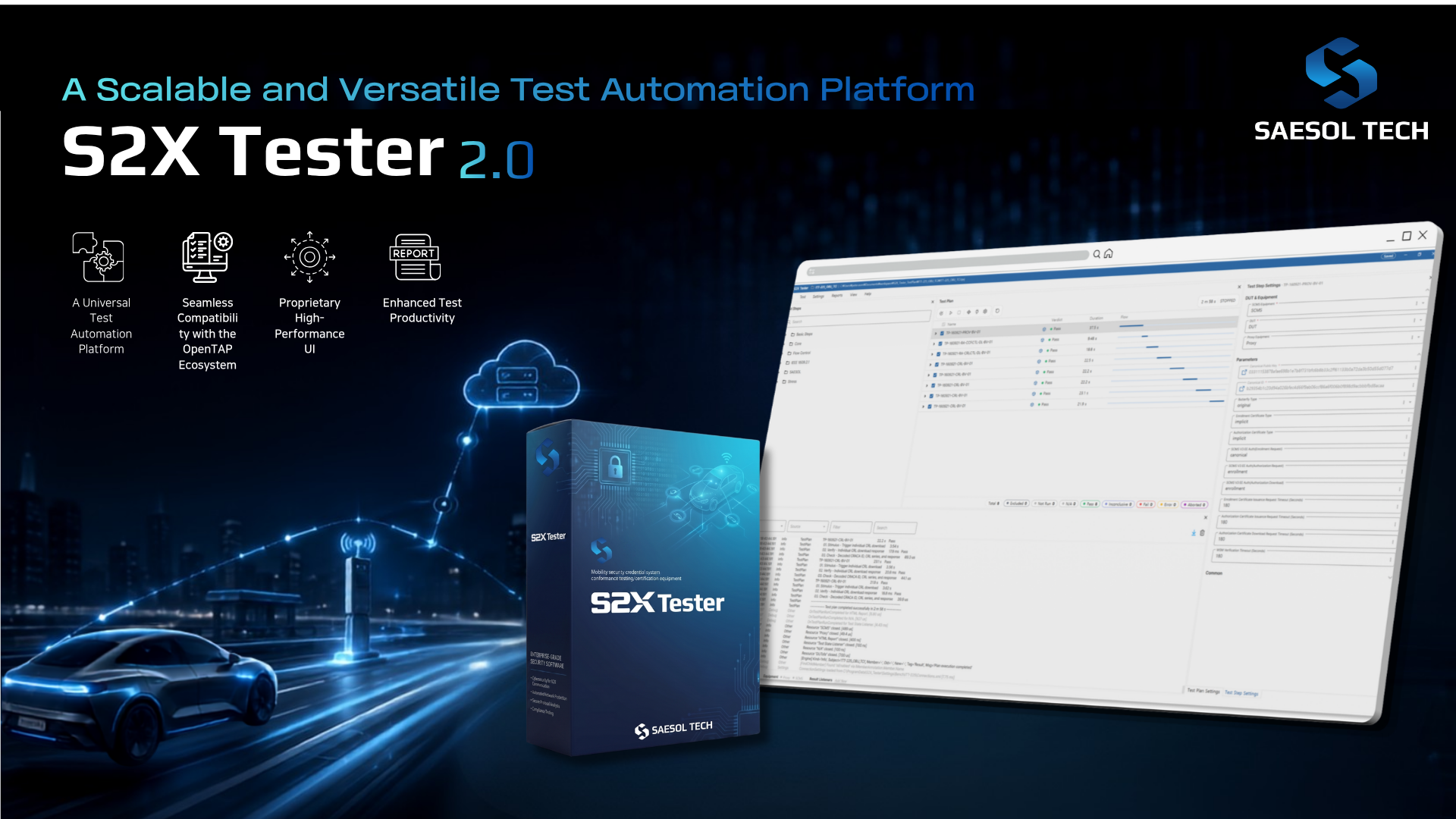
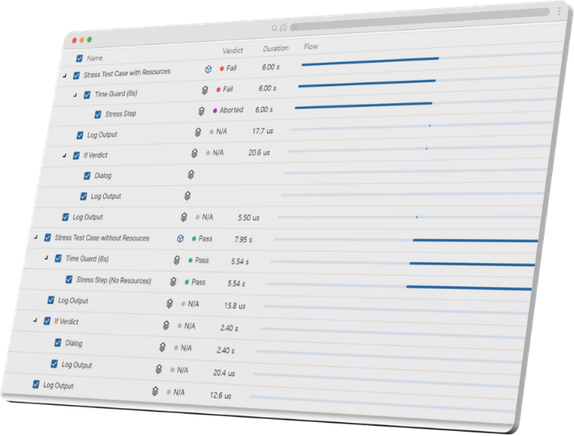
S2X Tester 2.0 is a plugin-based test automation platform that supports the entire testing lifecycle within a single environment—from Test Plan design and equipment control to test execution, result analysis, and report generation.
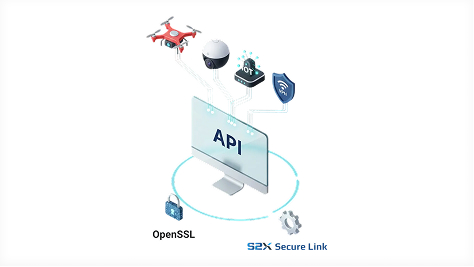
Its key advantage lies in its flexibility, enabling seamless application across various industries, including V2X, drones, defense, telecommunications, and embedded systems.
Universal Test Automation Platform
Scalability and Versatility
Proprietary High-Performance UI
Key Functions
Provides TestCase authoring tools
Plugin-Based DUT/Equipment Expansion: Extend the system flexibly by integrating new test equipment and DUTs (Devices Under Test) through a plugin-based architecture.
Profile-Based Test Environment Configuration: Save DUT and equipment configurations as Profiles and instantly load them when needed, enabling consistent test environments across multiple projects with a single click.
Real-Time Equipment Connection Visualization: Monitor the connection status of DUTs and key equipment intuitively through the UI with real-time visualization.
User-Centric Proprietary UI & Smart Operation
Zero-License-Cost Proprietary WPF UI: Built with an in-house WPF UI framework without additional licensing costs, enabling rapid customization and feature expansion tailored to customer and project requirements.
Separated Test Mode & Edit Mode: Improve operational stability by completely separating the test execution mode, designed to prevent unintended operations, from the editing mode used for test scenario creation.
Global Standard Core & Ecosystem Compatibility
Keysight OpenTAP® Core Engine Integration: Adopting the globally recognized OpenTAP® framework as the backend control engine ensures high integrity in low-level control operations and delivers world-class test stability.
Automated Result Generation & Analysis
Report Plugin Support: Automatically generate various report formats, including HTML reports, customized to specific project requirements.
Integrated Test Artifact Management: Automatically collect and manage comprehensive analysis data, including test results, execution logs, and screen/video captures, providing a streamlined environment for review and sharing.
Why, S2X Tester 2.0
Maximized Test Development Productivity
Hierarchical Test Structure
Reusability & Project-Based Management
Flexible Scalability Without Limitations
Plugin-Based Architecture
Flexible Resource Expansion
Automated Result Generation from Analysis to Reporting
Automated Test Artifact Generation
Security credential generation per test case supported
Essential infrastructure for autonomous driving environments
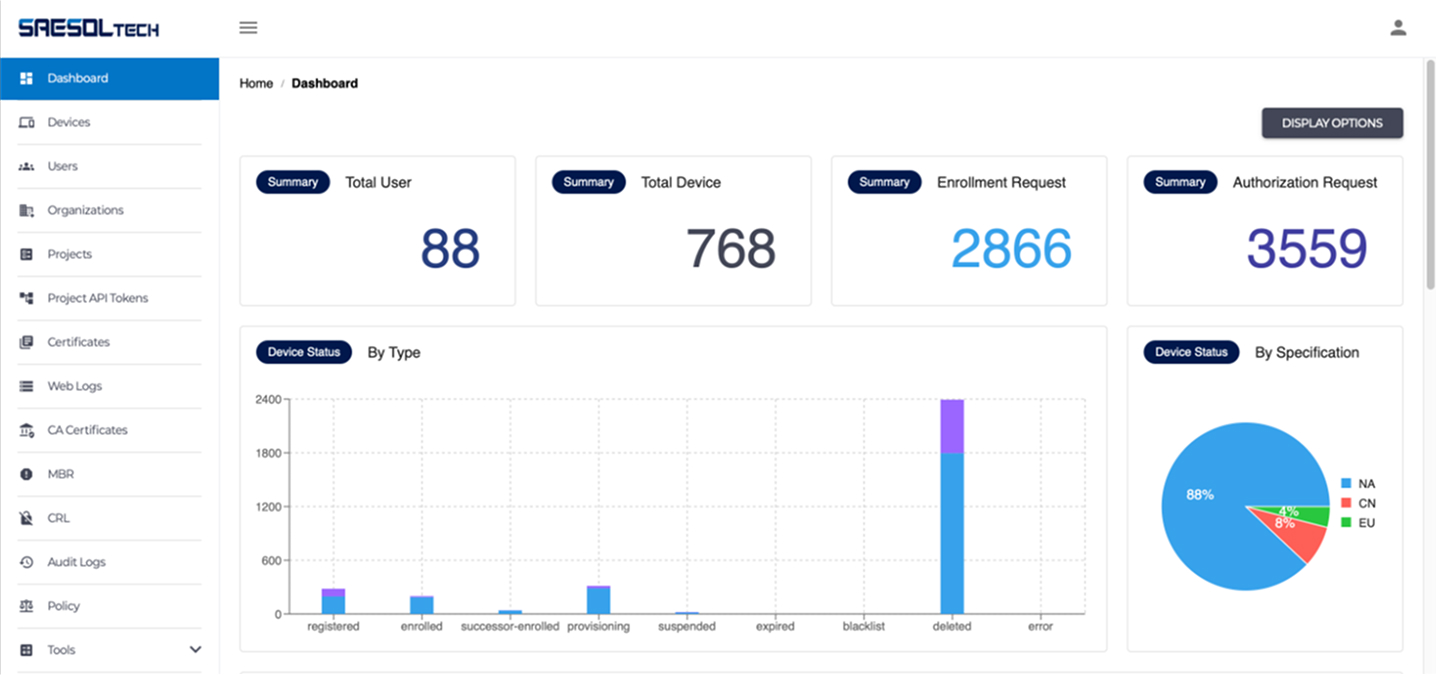
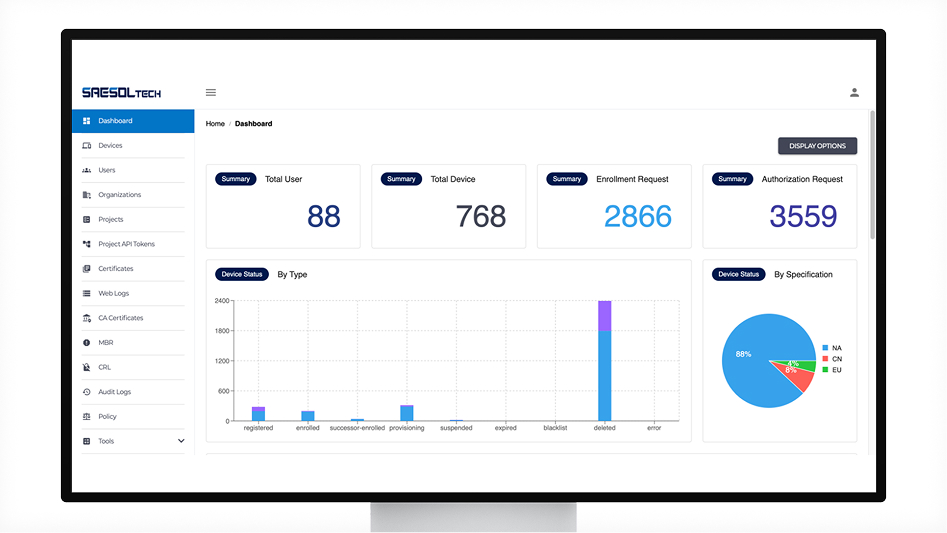
SAESOL Tech S2X CMS is a system that issues and manages large-scale, highly reliable security certificates in communication environments across mobility services, such as V2X, EV charging payment, and drone security authentication.
Supports both legacy and latest standards
Improves productivity in autonomous driving infrastructure
High-speed certificate issuance
Optimized cloud architecture
GS Certification Level 1
Global Certification & Registration
Listed in Production CTL of North American SCMS Manager
First Korean company registered in China TRCL (Root CA Trust List)
Registered in Europe ECTL Level 0
Partial completion of ECTL Level 1
Key Functions
IEEE 1609.2-2022 compatible certificate issuance
Issue Enrollment Certificates
Issue certificates for secure message signing: Authorization Certificates
SAESOL Tech announced today that its Root Certificate Authority (Root CA) has been successfully validated by the WebTrust assurance program and has been officially added to the SCMS Manager’s Production Certificate Trust List (CTL). SAESOL Tech becomes the second organization to appear on the production list in the U.S.
WebTrust is a globally recognized third-party audit program that verifies the operational integrity and security practices of Certificate Authorities (CAs). In the V2X (Vehicle-to-Everything) environment, where vehicles and roadside units continuously authenticate messages, recognition as part of the Production CTL is a critical milestone for establishing trust in the field. SAESOL Tech’s listing confirms that its PKI infrastructure can serve as a trusted anchor for production-grade V2X devices and infrastructure.
Wilmington, DE, March 19, 2025 — SAESOL Tech is set to lead the interoperability testing of the connected car security certification system, which is being conducted under the support of the U.S. Department of Transportation (USDOT).
SAESOL Tech, a company specializing in integrated security solutions for autonomous and connected cars, announced that it will lead the interoperability testing of the connected car security certification system (Virtual SCMS interoperability test) being conducted in OmniAir.
As the automotive industry continues to grow and evolve, technology and secure communication remain vital to its success. Integrated computer systems provide many modern features, such as advanced driver assistance systems (ADAS), adaptive cruise control, hybrid engines, internet access, and Bluetooth connections. However, manufacturers must ensure that any technology integrated into a vehicle meets compliance and security requirements.
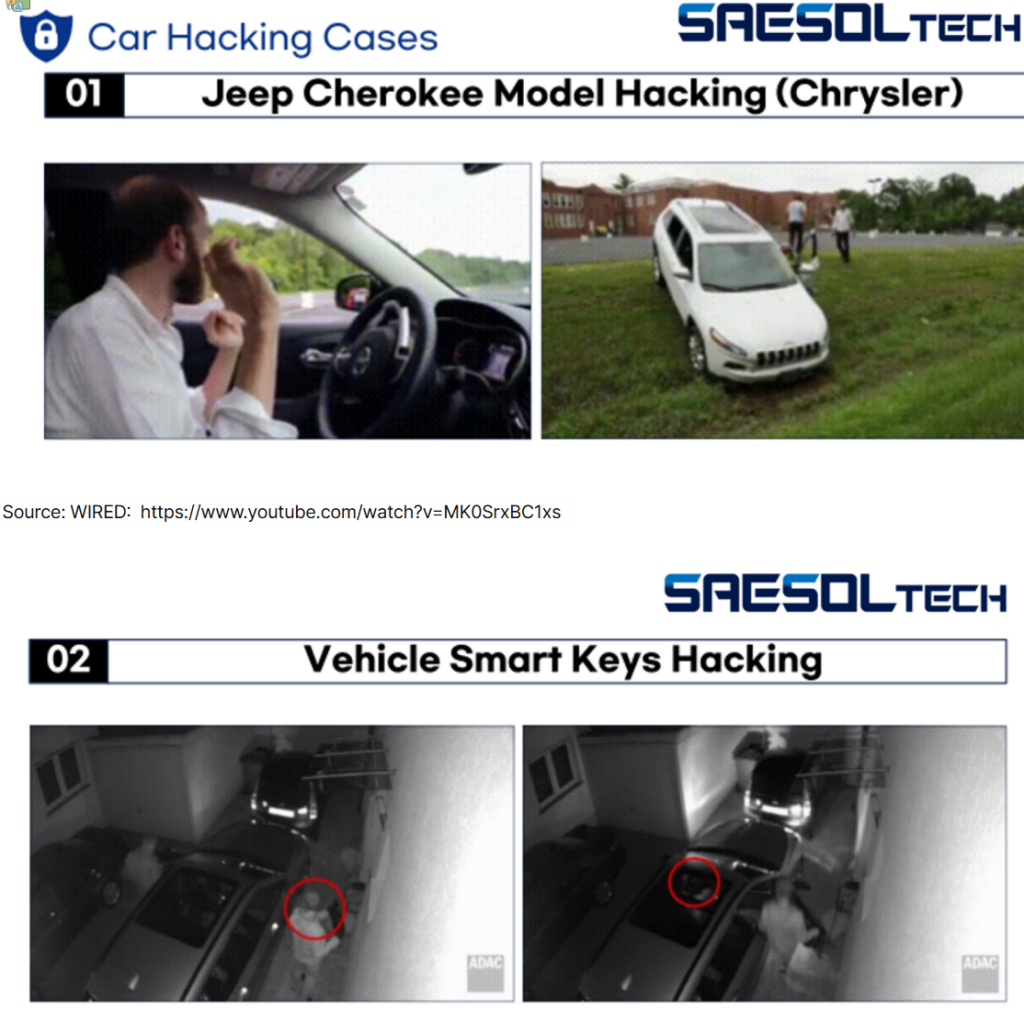
While V2X technology maximizes traffic efficiency and safety by enabling communication between vehicles and infrastructure or vehicles themselves, it also increases the attack surface that hackers can exploit. In March 2024, two cybersecurity researchers from Mysk, an independent cybersecurity research team, identified a security vulnerability that allowed them to generate a digital key to unlock a specific electric vehicle. Despite the presence of two-factor authentication, they successfully hacked the car using a $169 Flipper Zero device and a Wi-Fi board to open the vehicle’s doors.
By equipping the Flipper Zero with a Wi-Fi expansion module, attackers can create fake public Wi-Fi networks at service centers or charging stations. When unsuspecting users attempt to log in, their credentials—including email addresses, passwords, and two-factor authentication codes—can be intercepted. The hackers can then add a digital key to their app, allowing them to unlock the vehicle later.
Beyond direct hacking methods like identity theft, other significant threats include interfering with On-Board Diagnostics (OBD) systems, disrupting Controller Area Network (CAN) message protocols, or exploiting vulnerabilities in Bluetooth Low Energy (BLE) to bypass digital locks without a key.
In the past, cars were perceived as analog, mechanical devices. However, with rapid advancements in IoT technologies, vehicles have transformed into digital systems connected to surrounding infrastructure through Vehicle-to-Everything (V2X) communication. Consequently, hackers can now target not just the vehicle itself but also the broader traffic infrastructure and network protocols.
Technological Countermeasures for Enhancing V2X Contextual Security
How can we respond to potential security breaches as digitalization progresses? Here are some key technological countermeasures to strengthen security in the V2X context:
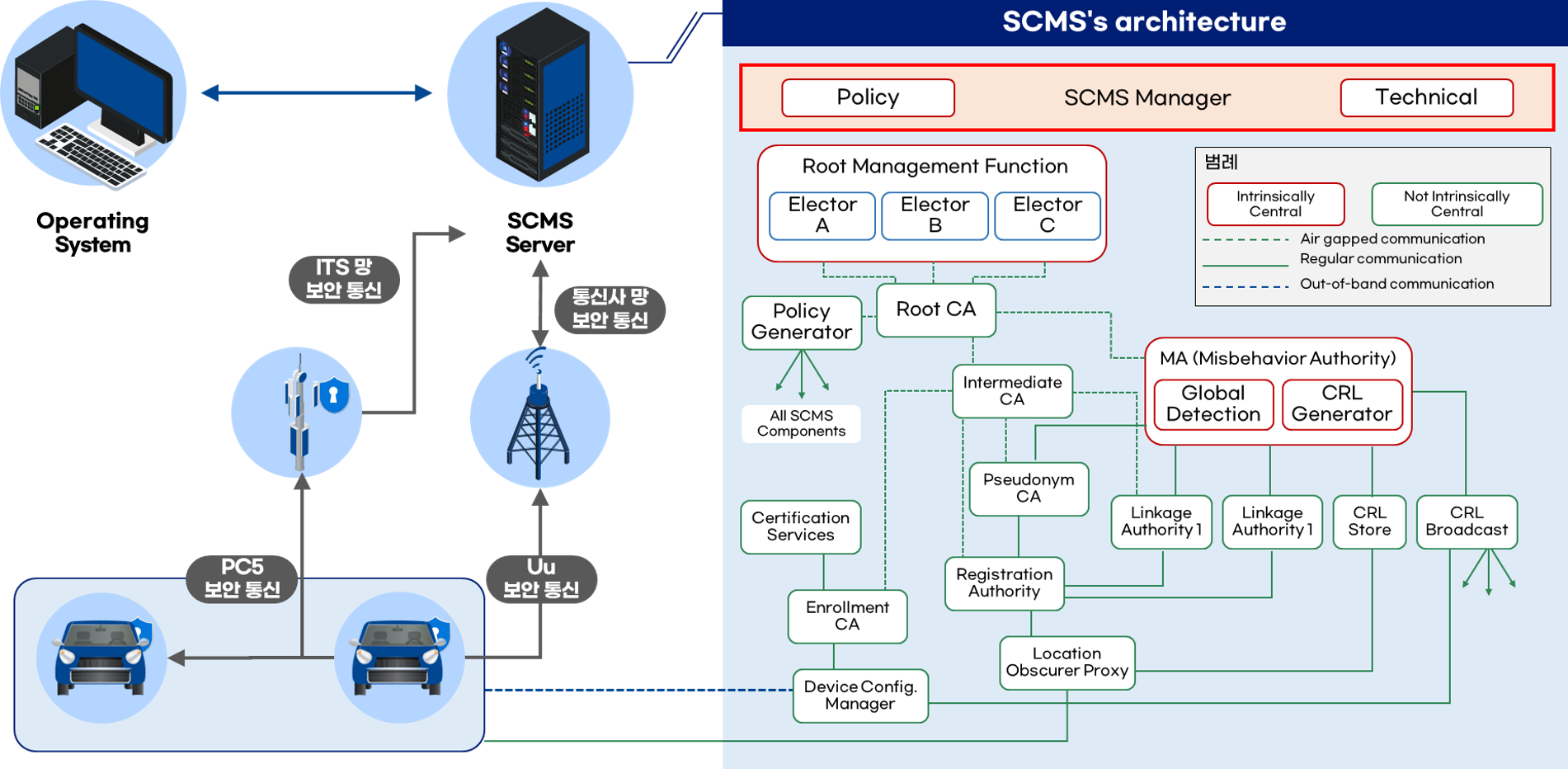
1. Establishing V2X Security Credential Management Systems (SCMS) – Introduce systems like the US Department of Transportation’s SCMS to create secure communication environments. – Assign roles to multiple certification authorities to manage the issuance of registration and security certificates. – Develop and operate systems to issue, renew, and revoke certificates.
2. Privacy Protection Through Certificates – Use anonymized certificates to protect personal information, such as vehicle location, and periodically update temporary IDs to safeguard unique vehicle identifiers. – Issue separate types of certificates for special and general vehicles.
3. Development of V2X Security Modules and Protocols – Design and deploy hardware security modules to securely store encrypted communication, certificates, and private keys. – Develop and implement security protocols tailored for V2X communication.
4. Message Authentication and Integrity Verification – Authenticate the sender of messages received by vehicles and verify the integrity of the messages before accessing their content. – Ensure confidentiality through encrypted communications.
5. Intrusion Detection and Prevention Systems (IDS/IPS) – Monitor abnormal traffic in real time within vehicles and V2X communication networks using anomaly detection algorithms. – Detect and mitigate threats such as Denial of Service (DoS) attacks or data tampering early.
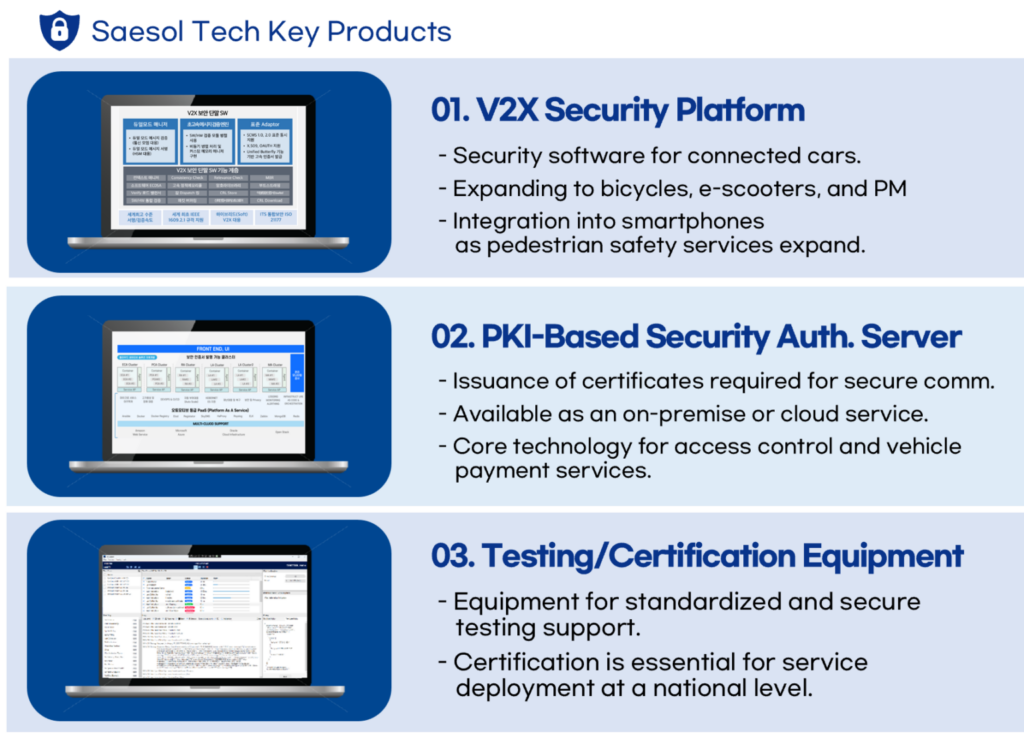
To implement these measures, it is essential to expand V2X security platforms not only for vehicles but also for personal mobility devices like e-bikes and surrounding infrastructure. Furthermore, constructing Public Key Infrastructure (PKI)-based security authentication systems and establishing testing and certification infrastructures to verify compliance with authentication protocols are crucial.
Saesol Tech: From Connected Car Security to Integrated Mobility Security
Saesol Tech is strengthening the V2X security platform with the following three product lines:
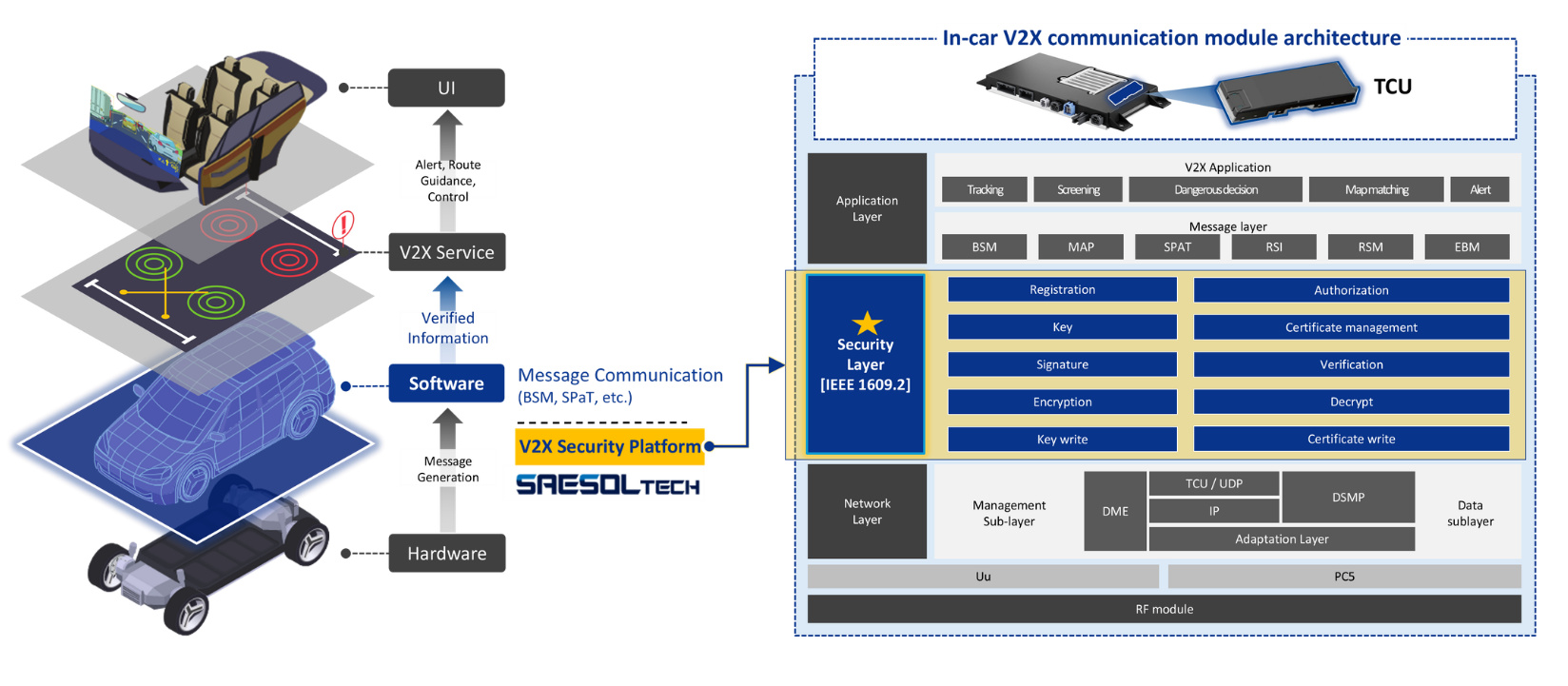
1. V2X Security Platform – Provides non-repudiation by ensuring the integrity of transmitted data and verifying the sender’s identity. – Offers world-class performance in terms of speed, security, and reliability.
2. PKI-Based Security Authentication Server – Delivers various authentication methods and issues certificates at ultra-high speeds. – Ensures scalability, reliability, and high availability using cloud architecture, supporting integrated security per ISO 21177 standards.
3. V2X Mobility Testing/Certification Equipment – Offers testing and certification solutions to evaluate compliance with security authentication systems and platform security. – Identifies malfunctions, errors, and vulnerabilities in communication software through V2X fuzz testing tools attached to test devices.
Using these product lines, Saesol Tech makes it difficult to compromise identity by securely managing private keys and authentication methods on PKI systems. Additionally, by leveraging fuzz testing, vulnerabilities in communication software can be identified and addressed preemptively. Saesol Tech remains committed to advancing the fields of micro-mobility, electric vehicles, autonomous vehicles, and traffic infrastructure to safeguard human lives and personal information.
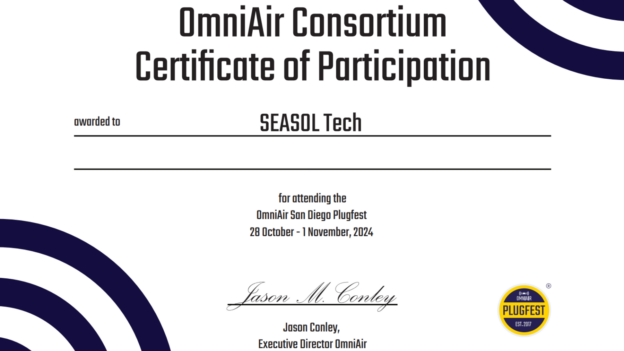
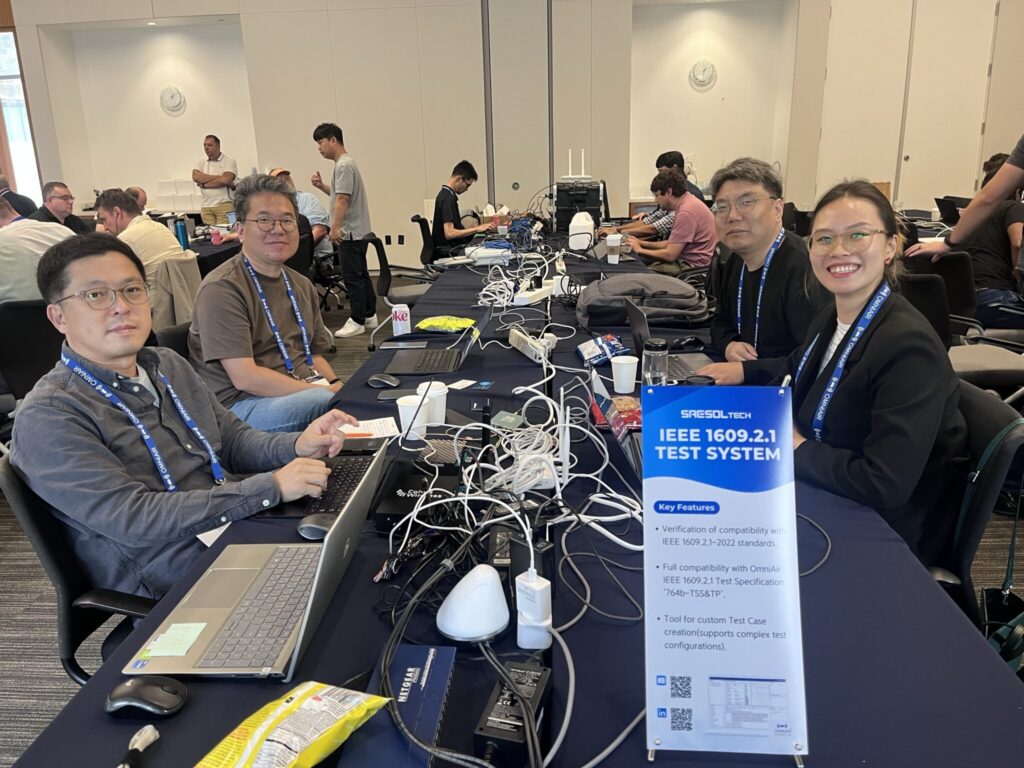
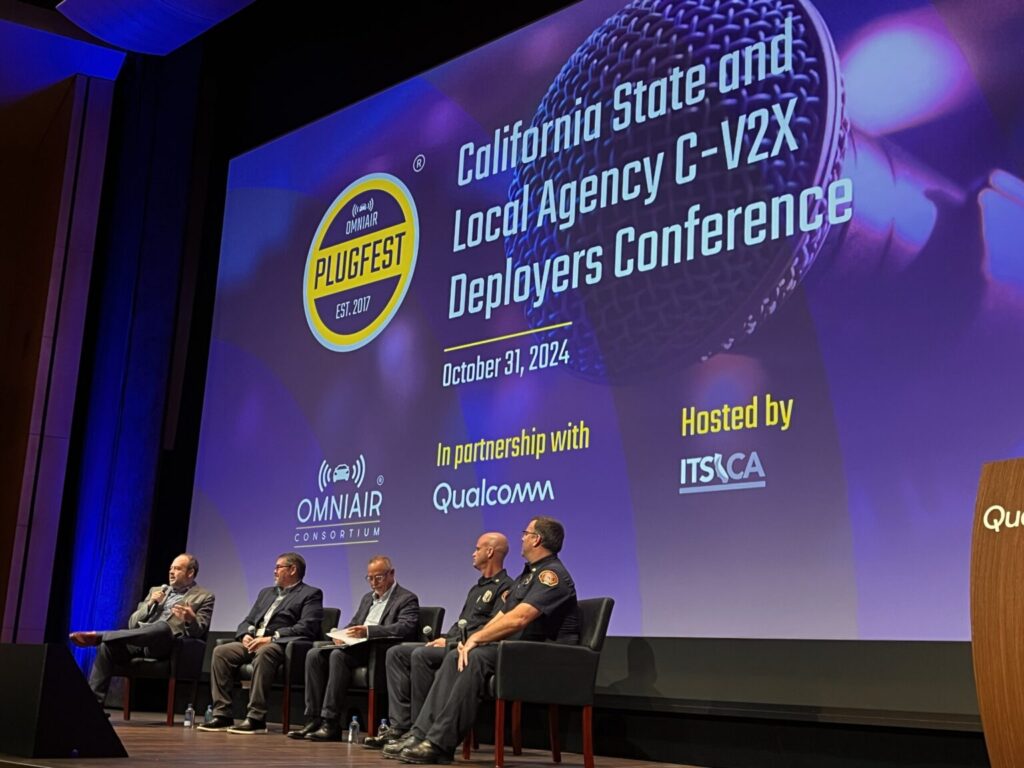
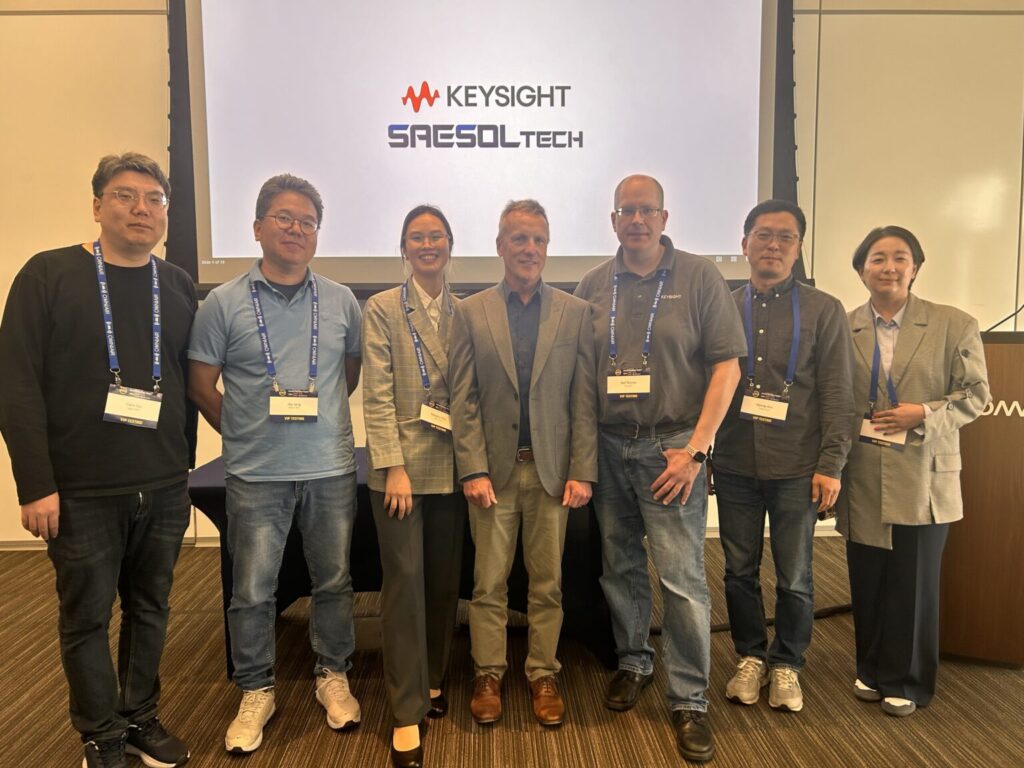
Saesoltech participated in the OmniAir Plugfest held at Qualcomm headquarters in San Diego, USA from October 28 to November 1, and successfully completed a demonstration and test of its V2X security authentication system standard, IEEE 1609.2.1 interoperability.
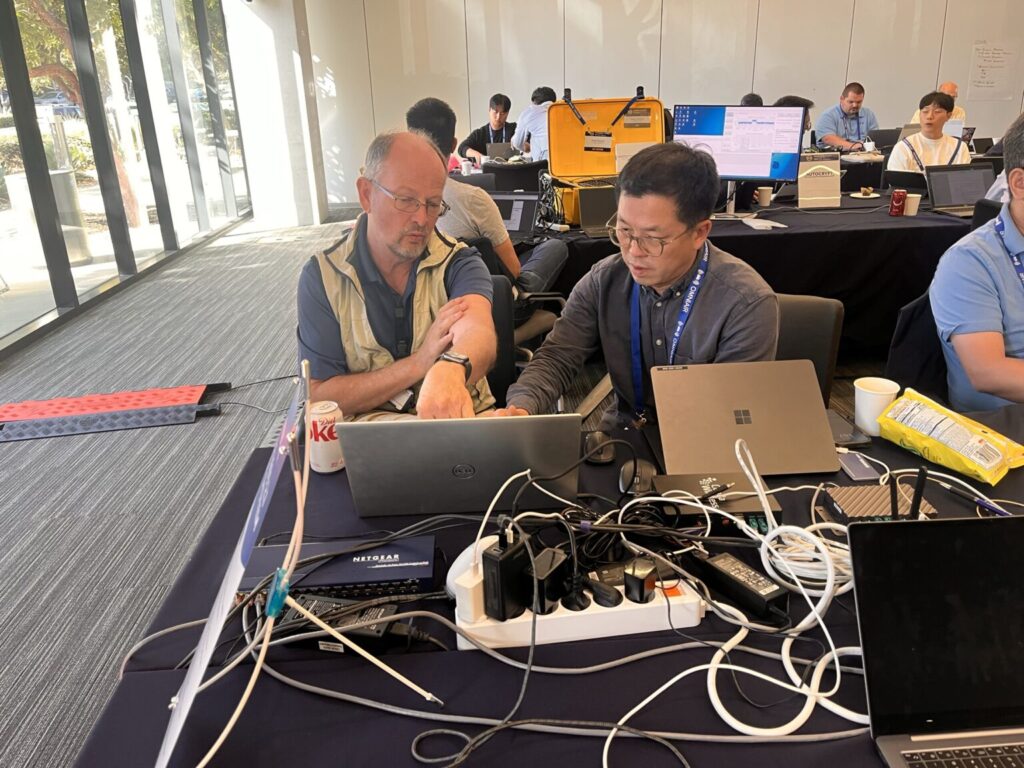
Saesoltech researchers successfully conducted interoperability tests in collaboration with various global companies and participated in several technical learning sessions to share the latest technological trends. Furthermore, they demonstrated various test cases for the IEEE 1609.2.1 standard, clearly impressing attendees with Saesoltech’s technological capabilities.
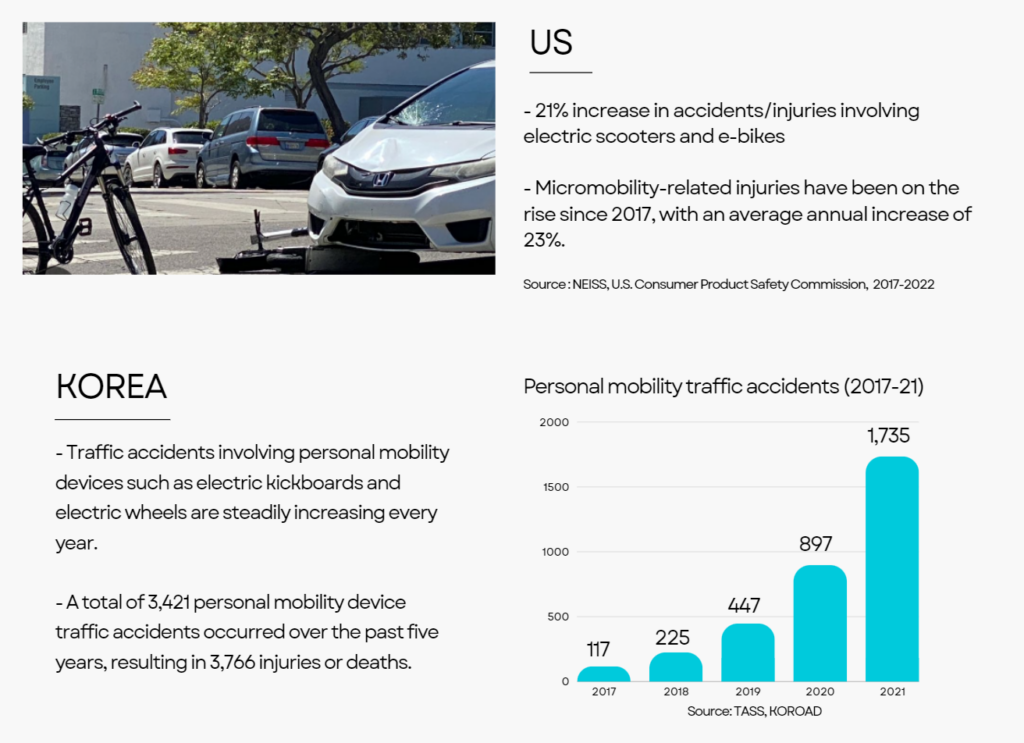
A recent accident involving a well-known celebrity driving an electric scooter under the influence has become a major social issue. According to KoROAD, the number of users of shared electric scooter surpassed 1.15 million in October 2020, and the number has grown even larger when including privately owned electric scooters.
As the number of users increases, so does the frequency of personal mobility (PM) traffic accidents and the accompanying social and economic costs.
What is the current state of micro-mobility safety?
What measures are being implemented to reduce the impact of micro-mobility accidents?
Micro-mobility refers to lightweight, small-scale vehicles designed for short trips of less than 10 kilometers. The most common examples include electric scooters, electric bicycles, and electric mopeds.
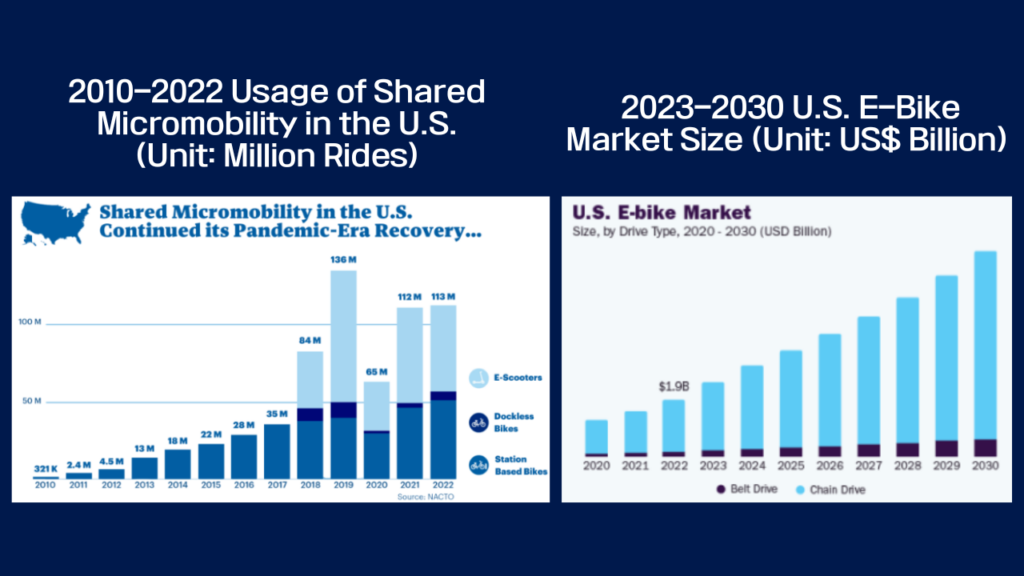
They have grown in popularity worldwide due to their affordability, ease of use, and low maintenance costs. According to a US research firm, the US electric bicycle market is expected to grow annually by 15.6%, reaching $6.3 billion by 2030.
Micro-mobility uses electric batteries to reduce carbon emissions, alleviate traffic congestion and parking shortages, and improve transportation access for vulnerable populations. Additionally, by merging with the sharing economy, it has evolved into a rental and borrowing model, promoting the distribution, sharing, and reuse of resources.
However, with the activation of micro-mobility, safety accidents and gaps in laws and regulations have emerged. Due to the high speeds, there is a significant risk of collisions with pedestrians or vehicles, and the potential to cause congestion by complicating traffic flows is high. Concerns about human casualties and negative economic impacts have led countries like the US and Europe to establish measures to address these issues.
■ Strengthening safety regulations: Speed limits, mandatory protective gear, and mandate the use of lights on dark or foggy days.
■ Improving transportation infrastructure: Dedicated lanes and areas for micro-mobility vehicles to reduce congestion and collisions.
■ Education programs: Campaigns to teach safe riding practices and safety guidelines provided on shared service platforms.
■ Designating parking areas: Encouraging users to park and return vehicles in specific areas to prevent disorder.
■ Establishing restricted areas: Banning the use of micro-mobility devices in zones where congestion or pedestrian safety is a concern.
Along with infrastructure, clarifying legal regulations and operational guidelines is expected to resolve a significant portion of incidents and accidents caused by micro-mobility. In Europe, data from MMfE (Micro-Mobility for Europe) in 2023 indicated that the total number of reported injuries involving shared e-scooters per million rides decreased by 44%, and serious injuries requiring treatment dropped by 19%. Similarly, overall shared e-bike injuries decreased by 44%, with serious injuries dropping by 16%.This progress is driven by manufacturers’ technological innovations, targeted educational campaigns, and government initiatives aimed at improving infrastructure.
V2X Technology: A Game Changer for Reducing Micro-Mobility Accident Rates
Given these challenges, governments and companies need to actively invest in infrastructure technologies that can help reduce the accident rate in micro-mobility. One promising solution is V2X (Vehicle-to-Everything), a technology that has recently gained significant attention.
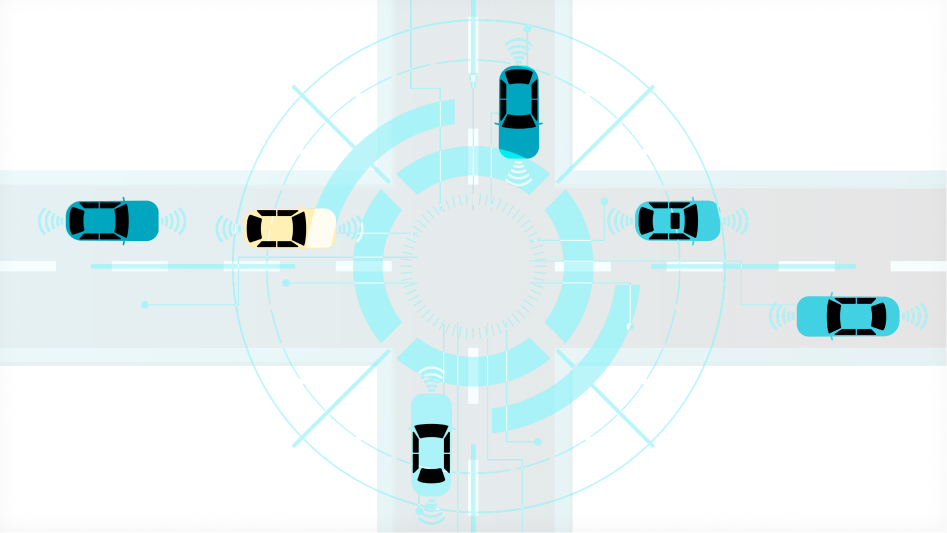
V2X stands for “vehicles to everything,” allowing vehicles to communicate in real time with their surrounding environment. It enables vehicles to directly interact with other vehicles (V2V), road infrastructure (V2I), networks (V2N), and pedestrians (V2P) to enhance road safety and traffic efficiency.
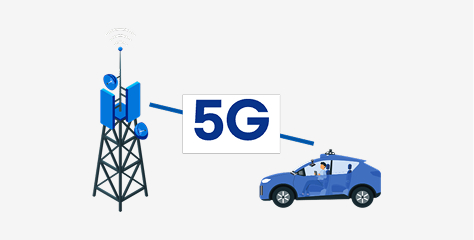
Additionally, to minimize communication disruptions caused by handovers between base stations, V2X incorporates direct communication technologies, such as Wi-Fi-based WAVE (IEEE820.11p) and cellular bandwidth-based communication, alongside LTE/5G. This ensures stable operation even when existing infrastructure cannot be relied on.
The primary goal of V2X security is to protect the integrity, confidentiality, and availability of the data exchanged within the traffic ecosystem. V2X security is not optional but essential for preventing unauthorized access through hacking, protecting sensitive information, and maintaining the safety and functionality of the entire traffic system.
Applying V2X to micro-mobility security offers the following benefits:
1. Real-time data exchange : V2X allows for the detection of traffic signals, elderly protection zones, and congested areas, contributing to prevent accidents and improve traffic flow.
2. User privacy protection : V2X uses data encryption and anonymization technologies to protect user privacy while securely transmitting necessary information.
3. Integration with urban infrastructure : V2X integrates with smart city infrastructure, connecting with various city management systems to enhance efficiency.
These benefits can greatly improve the safety and convenience of micro-mobility.
Saesol Tech: Leading the V2X Security Technology Market
With the expansion of electric vehicles, autonomous cars, and micro-mobility, interest in V2X infrastructure and security systems is growing. For a successful V2X deployment, it is essential to have standardized communication protocols and improved privacy regulations.
Saesol Tech provides advanced V2X integrated security solutions, securing a leading position in the V2X security market by achieving cost reduction and productivity improvement, particularly through its SCMS (Security Credential Management System). We are developing standardized communication protocols to support V2X infrastructure and security certification systems for the expansion of connected cars, autonomous vehicles, and micro-mobility, while also rigorously addressing privacy protection. Through this innovative approach, Saesol Tech is contributing to creating a safer and more reliable smart mobility environment for the future.