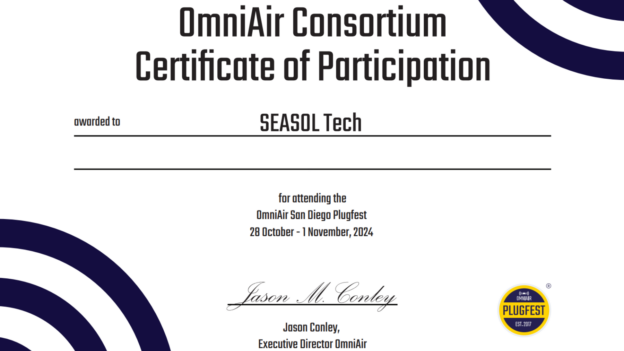
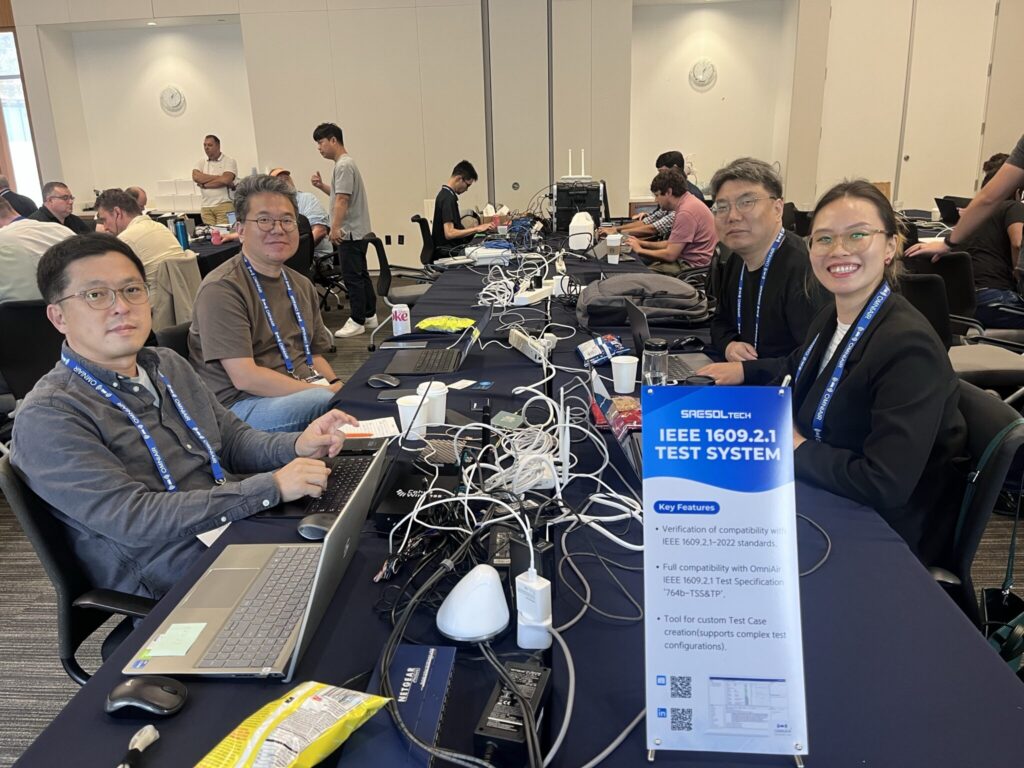
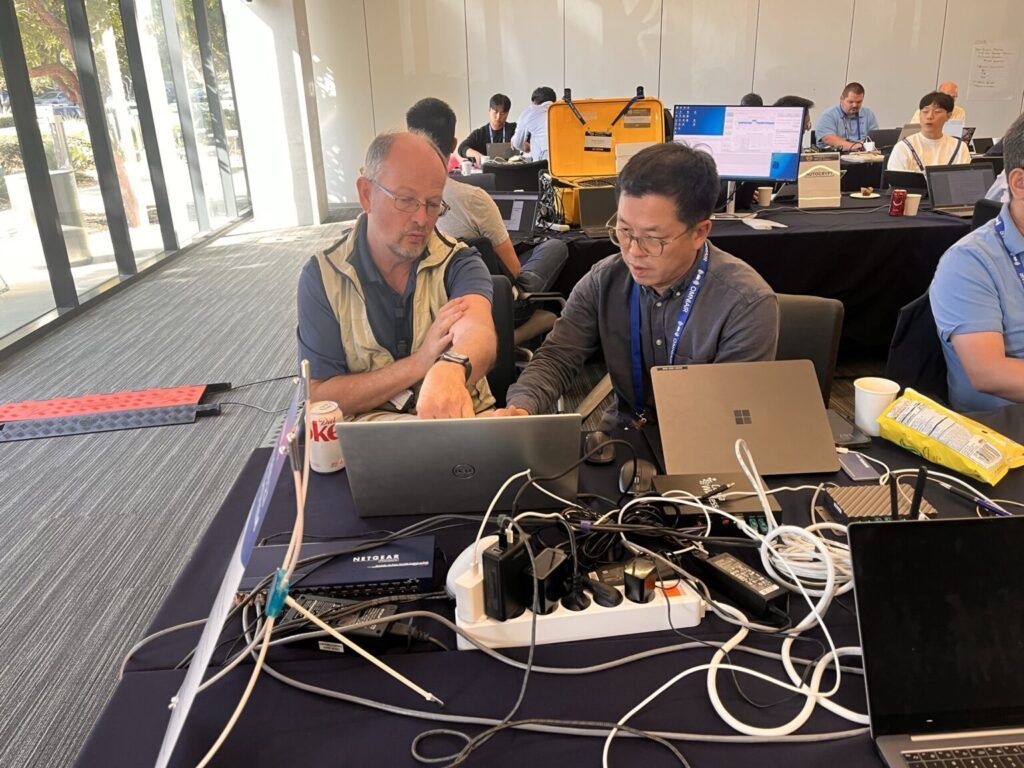
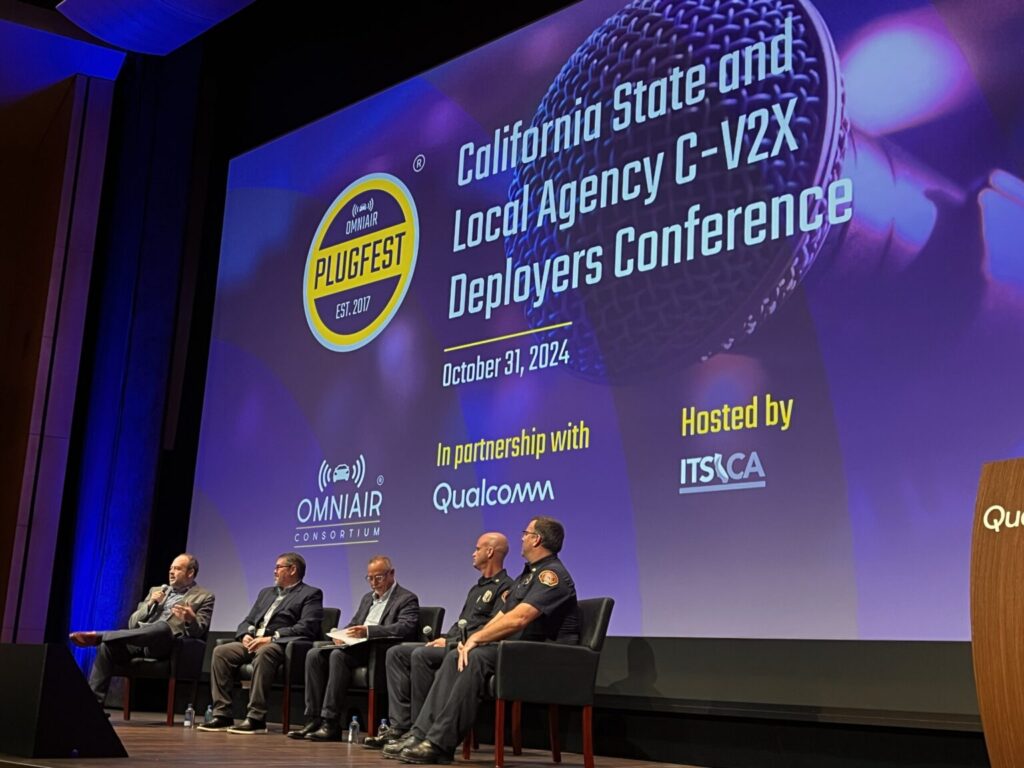
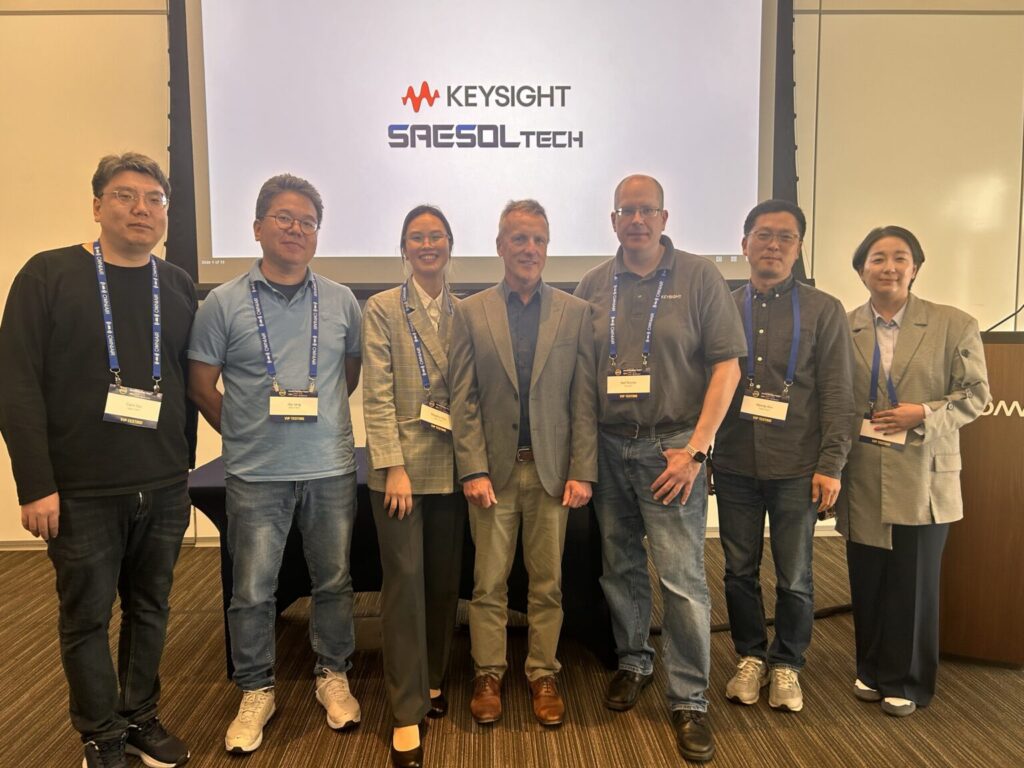
Saesoltech participated in the OmniAir Plugfest held at Qualcomm headquarters in San Diego, USA from October 28 to November 1, and successfully completed a demonstration and test of its V2X security authentication system standard, IEEE 1609.2.1 interoperability.
Saesoltech researchers successfully conducted interoperability tests in collaboration with various global companies and participated in several technical learning sessions to share the latest technological trends. Furthermore, they demonstrated various test cases for the IEEE 1609.2.1 standard, clearly impressing attendees with Saesoltech’s technological capabilities.
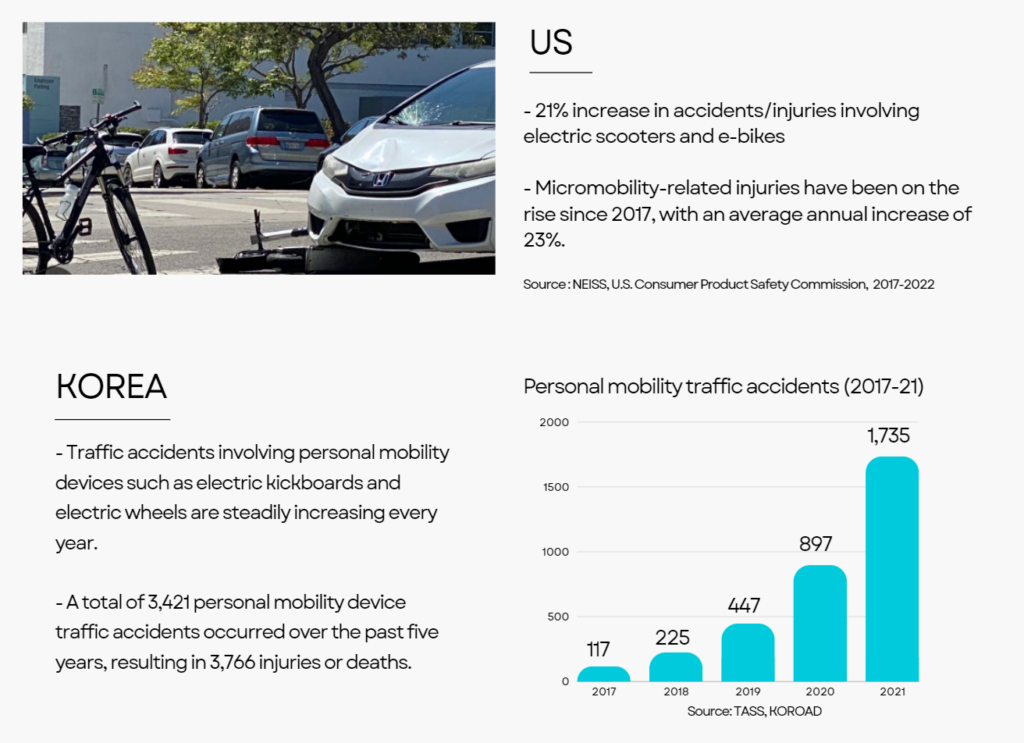
A recent accident involving a well-known celebrity driving an electric scooter under the influence has become a major social issue. According to KoROAD, the number of users of shared electric scooter surpassed 1.15 million in October 2020, and the number has grown even larger when including privately owned electric scooters.
As the number of users increases, so does the frequency of personal mobility (PM) traffic accidents and the accompanying social and economic costs.
What is the current state of micro-mobility safety?
What measures are being implemented to reduce the impact of micro-mobility accidents?
Micro-mobility refers to lightweight, small-scale vehicles designed for short trips of less than 10 kilometers. The most common examples include electric scooters, electric bicycles, and electric mopeds.
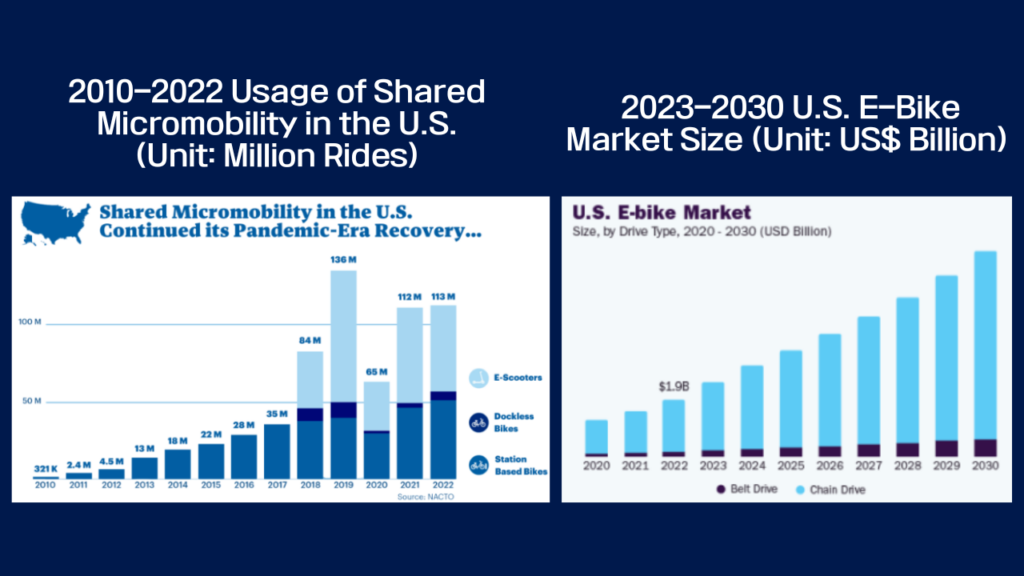
They have grown in popularity worldwide due to their affordability, ease of use, and low maintenance costs. According to a US research firm, the US electric bicycle market is expected to grow annually by 15.6%, reaching $6.3 billion by 2030.
Micro-mobility uses electric batteries to reduce carbon emissions, alleviate traffic congestion and parking shortages, and improve transportation access for vulnerable populations. Additionally, by merging with the sharing economy, it has evolved into a rental and borrowing model, promoting the distribution, sharing, and reuse of resources.
However, with the activation of micro-mobility, safety accidents and gaps in laws and regulations have emerged. Due to the high speeds, there is a significant risk of collisions with pedestrians or vehicles, and the potential to cause congestion by complicating traffic flows is high. Concerns about human casualties and negative economic impacts have led countries like the US and Europe to establish measures to address these issues.
■ Strengthening safety regulations: Speed limits, mandatory protective gear, and mandate the use of lights on dark or foggy days.
■ Improving transportation infrastructure: Dedicated lanes and areas for micro-mobility vehicles to reduce congestion and collisions.
■ Education programs: Campaigns to teach safe riding practices and safety guidelines provided on shared service platforms.
■ Designating parking areas: Encouraging users to park and return vehicles in specific areas to prevent disorder.
■ Establishing restricted areas: Banning the use of micro-mobility devices in zones where congestion or pedestrian safety is a concern.
Along with infrastructure, clarifying legal regulations and operational guidelines is expected to resolve a significant portion of incidents and accidents caused by micro-mobility. In Europe, data from MMfE (Micro-Mobility for Europe) in 2023 indicated that the total number of reported injuries involving shared e-scooters per million rides decreased by 44%, and serious injuries requiring treatment dropped by 19%. Similarly, overall shared e-bike injuries decreased by 44%, with serious injuries dropping by 16%.This progress is driven by manufacturers’ technological innovations, targeted educational campaigns, and government initiatives aimed at improving infrastructure.
V2X Technology: A Game Changer for Reducing Micro-Mobility Accident Rates
Given these challenges, governments and companies need to actively invest in infrastructure technologies that can help reduce the accident rate in micro-mobility. One promising solution is V2X (Vehicle-to-Everything), a technology that has recently gained significant attention.
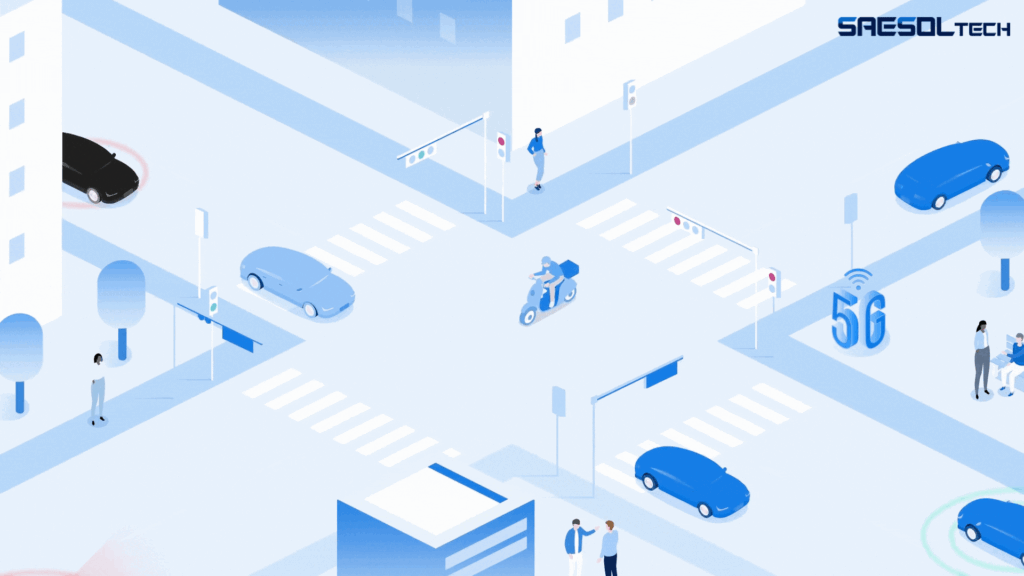
V2X stands for “vehicles to everything,” allowing vehicles to communicate in real time with their surrounding environment. It enables vehicles to directly interact with other vehicles (V2V), road infrastructure (V2I), networks (V2N), and pedestrians (V2P) to enhance road safety and traffic efficiency.
Additionally, to minimize communication disruptions caused by handovers between base stations, V2X incorporates direct communication technologies, such as Wi-Fi-based WAVE (IEEE820.11p) and cellular bandwidth-based communication, alongside LTE/5G. This ensures stable operation even when existing infrastructure cannot be relied on.
The primary goal of V2X security is to protect the integrity, confidentiality, and availability of the data exchanged within the traffic ecosystem. V2X security is not optional but essential for preventing unauthorized access through hacking, protecting sensitive information, and maintaining the safety and functionality of the entire traffic system.
Applying V2X to micro-mobility security offers the following benefits:
1. Real-time data exchange : V2X allows for the detection of traffic signals, elderly protection zones, and congested areas, contributing to prevent accidents and improve traffic flow.
2. User privacy protection : V2X uses data encryption and anonymization technologies to protect user privacy while securely transmitting necessary information.
3. Integration with urban infrastructure : V2X integrates with smart city infrastructure, connecting with various city management systems to enhance efficiency.
These benefits can greatly improve the safety and convenience of micro-mobility.
Saesol Tech: Leading the V2X Security Technology Market
With the expansion of electric vehicles, autonomous cars, and micro-mobility, interest in V2X infrastructure and security systems is growing. For a successful V2X deployment, it is essential to have standardized communication protocols and improved privacy regulations.
Saesol Tech provides advanced V2X integrated security solutions, securing a leading position in the V2X security market by achieving cost reduction and productivity improvement, particularly through its SCMS (Security Credential Management System). We are developing standardized communication protocols to support V2X infrastructure and security certification systems for the expansion of connected cars, autonomous vehicles, and micro-mobility, while also rigorously addressing privacy protection. Through this innovative approach, Saesol Tech is contributing to creating a safer and more reliable smart mobility environment for the future.
In the rapidly evolving landscape of intelligent transportation systems (ITS), Saesol Tech is offering cutting-edge solutions in the realm of vehicle-to-everything (V2X) communication security.
It is dedicated to addressing the pressing cybersecurity challenges facing connected vehicles and mobility ecosystems.
Saesol Tech’s efforts are exemplified in its latest offering: the IEEE1609.2.1 Test System. Unveiled at the prestigious Plugfest Mcity event in Ann Arbor, Michigan, from May 13-17, 2024, this state-of-the-art system represents a significant milestone in ensuring the safety, security, and reliability of V2X communication networks.
OmniAir Consortium®, the leading industry association promoting interoperability and certification for ITS, tolling and connected vehicles, announces 2023 leaders for OmniAir® Working Groups and Special Initiatives.
OmniAir’s Working Groups develop the policies, procedures and specifications that support OmniAir’s independent, third-party testing and certification programs. OmniAir Certified® devices conform with industry standards and meet minimum interoperability, security, and performance requirements.
SANTA BARBARA, Calif., Jan. 4, 2023 /PRNewswire/ — INTEGRITY Security Services (ISS) today announces that it has entered into a partnership with SaeSol Tech (SST) to deliver industry-leading security technology to automotive manufacturers to protect Connected and Autonomous Vehicles. This partnership brings together ISS’s industry-leading automotive security platforms for Device Lifecycle Management (DLM) and Vehicle-to-Anything (V2X) connectivity with expert integration, support, and development services for global automotive manufacturers.
“Partnering with SaeSol Tech to deliver our industry-leading security solutions for customers in Asia will allow us to provide the very best security design, support, and technology integration to support the next generation of connected vehicles,” says David Sequino, Co-Founder and President of INTEGRITY Security Services.